 Lenka's Way of Lace
Serendipitous Wire Test
November 19, 2024
I like to say that wire lace is forever. It is true, because wire is much stronger than threads and deteriorates slowly. But when some of my metal lace creation changed colour over time I realized that longevity of wire coating might be uncertain.
Craft copper wire is coated with a layer of material that protects the raw metal and gives wire its colour. When the coating is not completely sealed the air reaches wire beneath and reacts with it in a natural chemical process. In case of outside copper and bronze sculptures, it is expected and accepted that the tarnish will eventually deposit and permanently colour the artwork. But it is much harder to surrender our delicate lace art to natural forces. We know what happened to antique metallic laces when they lost their lustre…
The first copper wires I used for making lace were from magnet coils found in old electrical appliances. They were durable, made to withstand harsh conditions of various environments. Despite being fifty-sixty years old the spools of wire looked like new. Old enamelled wires were of excellent quality, made to last, but the choice of colours was limited. Many of my works were created in the typical colour range of reds, yellows and browns, with occasionally green. It was fine at the beginning, when I welcomed any wire for my lace, but then of course I started to dream about blues, turquoise and purples…
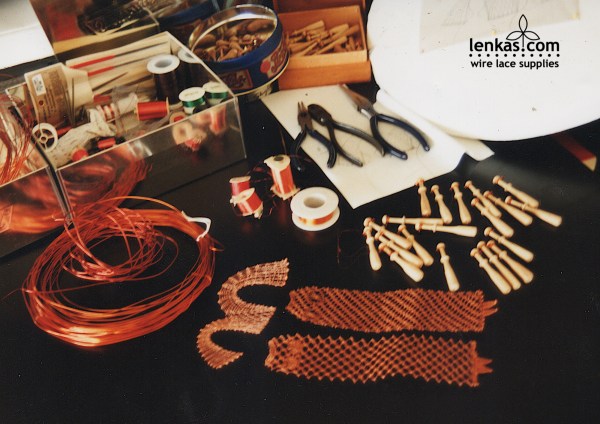
Luckily, I was not alone searching for coloured copper. There was a growing demand from other artisans and artists – knitters, weavers and crochetiers (and zealous fly tyers). Right at that time some manufacturers, looking to find alternative markets, started to produce wire for craft field. It was not an easy task to satisfy the needs of creative people who wanted soft, pliable wire in lots of colours. New products were tested with mixed outcomes. The coating was posing the biggest challenge; often it was weak and chipped or peeled off during work. Sometimes the wires worked fine, but the colours were unstable and turned dull and grey really quickly. It was time of trial and error but finally a handful of manufacturers were able to produce reasonably stable coloured copper wire. I still have some works from those times, still in good condition, aging gracefully as their colours are slowly fading. And now, many years later, I have a better understanding of the process.
Eventually, I found good quality wires for lacemaking, and I consider myself lucky to be able to work with material that is worthy of such time-consuming and labour-intensive craft as bobbin lace. Over time, “my” manufacturer produced many beautiful colours while keeping or exceeding the quality standard.
About two years ago, I noticed the wire changed. Being too small a customer, I do not get informed about product modifications, but I could see and feel the difference in the new spools. The colours were richer and brighter and the wire felt just a tiny bit harder, springier. Based on my experience, I deduced that the coating technique changed to produce brighter hues, and I trusted that the surface quality improved as well. I tried a few simple chemical tests with satisfactory results, and left it at that. Time will tell.

And soon enough, it did. This year, when I was working in my front yard, trimming back a pachysandra border, I noticed bright sparkle in the depth of the bundled stems. I reached in and pulled out two spools of wire, silver plated and bright pink colour. They looked like they have been there for a while, because the spools were all dirty. and wet. But the colours were still brilliant!
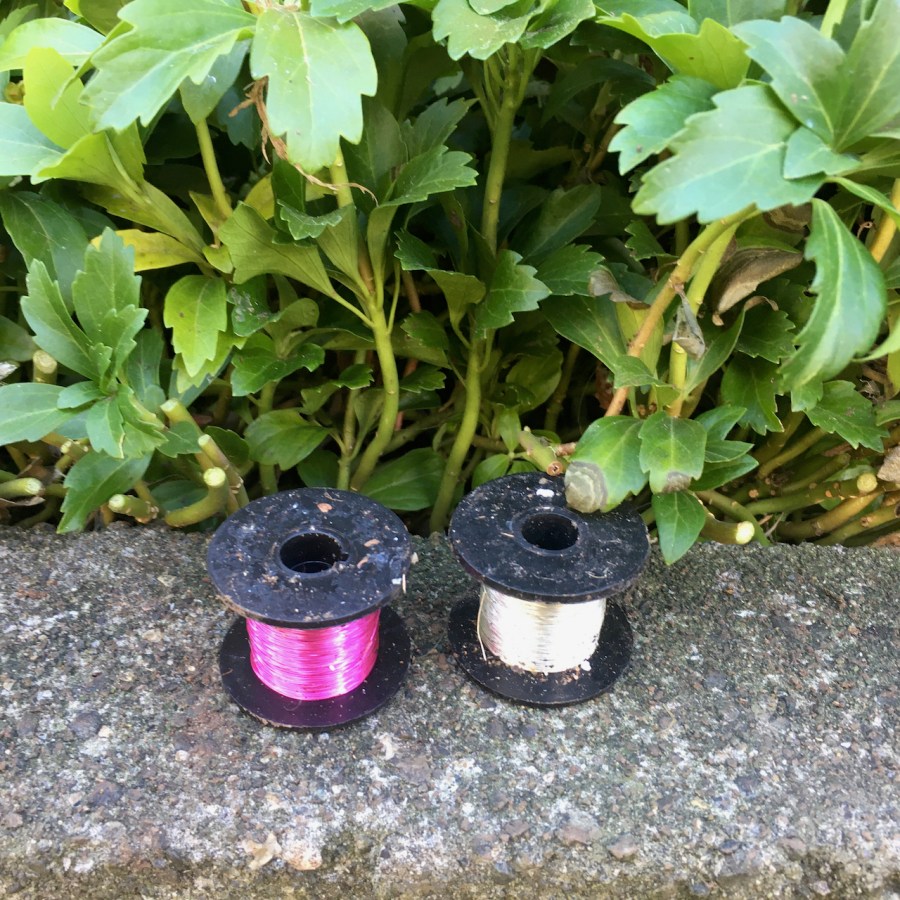

How did the copper wire spools end up in the vegetation?
With each new product I need photos for my online shop. Because the shiny wires are difficult to photograph in artificial light, I have the best chance to capture true-to-colour images in muted natural daylight on a cloudy day. So I usually set up the photo station on a landing in front of the house. After a photoshoot on one of those perfect grey days, two runaway spools did not make it back home. They must have slipped over the edge of the landing and descended into pachysandra’s embrace. I did not notice them missing and they stayed there… for a very long time. The wire was exposed to outside elements – a lot of moisture during rainy season, followed by dry summer heat (but not direct sunlight), steady ocean air breeze, rain again, and cold, including extreme freeze (for the West Coast of Canada anyway) of minus fifteen degrees Celsius for almost a week. Even the pachysandra, a tough plant that normally tolerates our weather without complaining, showed some frost damage after the winter.
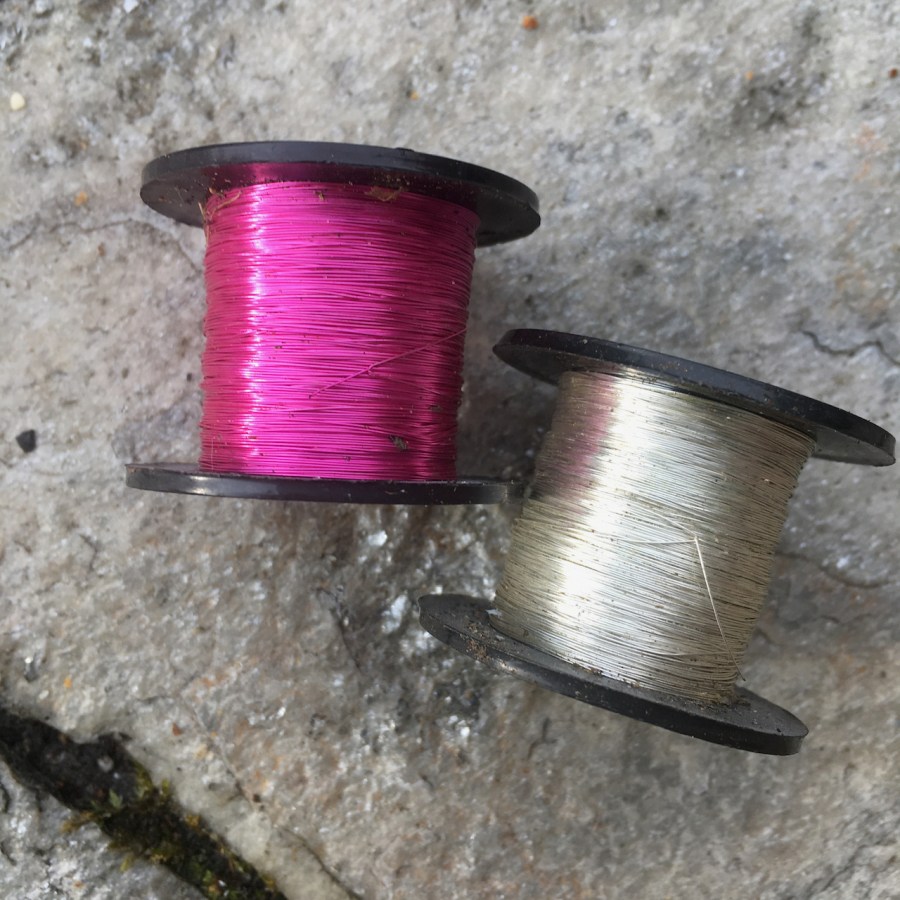
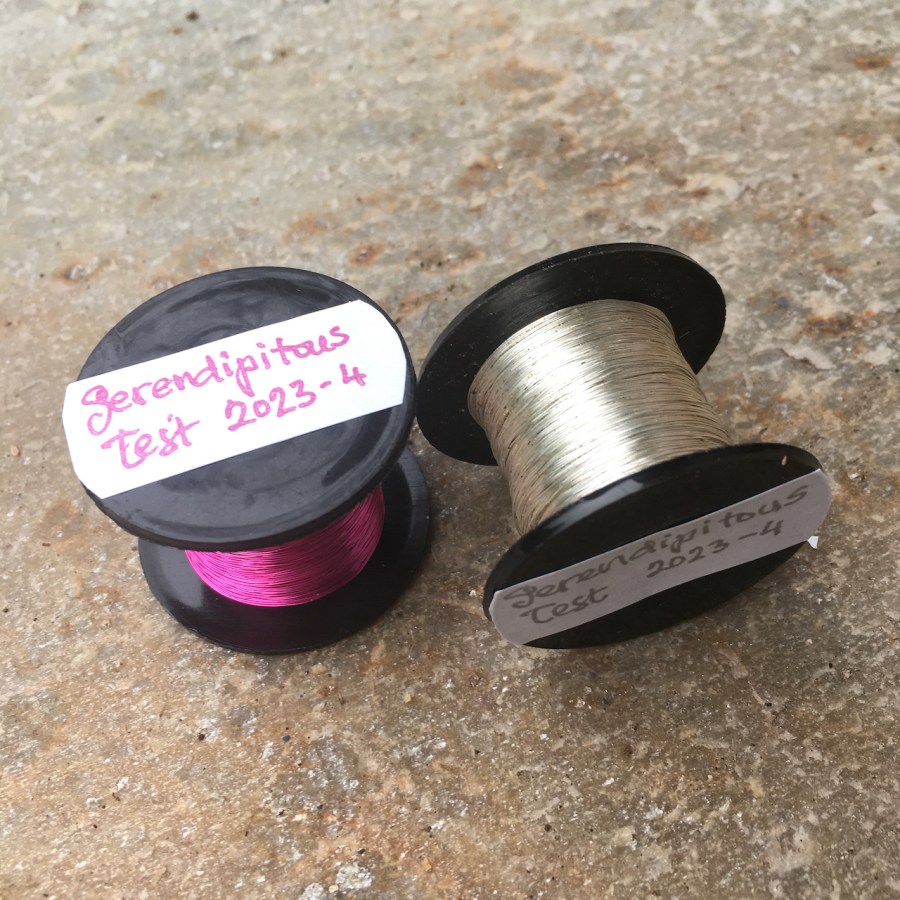
Surprisingly, the two spools of enamelled copper wire survived intact. I cleaned them and they look like new. A very impressive result of the unplanned test, and a proof that the quality of these wires is indeed excellent! Their coating’s ability to protect the colour is especially significant in the case of the silver plated wire. Silver readily tarnishes when exposed to moisture, and would turn black quickly if the surface was not perfectly sealed.
Now I have a proof that the silver-plated copper wire is truly non-tarnishing! And I am very happy to know that with this material our wire laceworks have a real chance to be forever 🙂
Remember to treat the wire gently to keep the surface whole and prevent scratches by pins, sewing hooks and nudge tools. With proper care your wire lace will shine and sparkle for years to come.
Both lost and found spools are now back in my studio. I will not sell them, of course, they stay in my wire box for future observation. They join other spools in my collection of miss-shaped, mislabeled and miss-wound spools. Eventually the wire will complete its uncommon journey and become a piece of unique lace.

Just in time for a merry crafting season, WireLaceSupplies shop is stocked with wire in every colour for all your creative needs 🙂
Happy lacemaking, and lacemaking with wire especially!
Lenka
PS: Before I finished writing this post, I already started working on a new project with the mentioned silver wire. Next post is coming soon!
 Lenka's Way of Lace